
The AMD Radeon RX 9070 enters the graphics card market at an interesting juncture. Hot on the heels of Nvidia's latest generation, this $549 card directly competes with the underwhelming GeForce RTX 5070. Currently, AMD easily wins this matchup, making the RX 9070 a compelling choice for 1440p gaming. However, the picture isn't entirely straightforward.
AMD's own Radeon RX 9070 XT, a mere $50 more expensive, presents a challenge. While the 9070's 8% performance deficit aligns with its 9% lower price, the small price difference makes the 9070 XT a difficult proposition to ignore for optimal performance. Nevertheless, AMD's internal competition highlights the strength of its offerings.
Purchasing Guide
The AMD Radeon RX 9070 launches March 6th, with a starting price of $549. Expect variations in pricing across different models. Prioritize purchasing a model as close to the starting price as possible, given its proximity in cost to the superior RX 9070 XT.
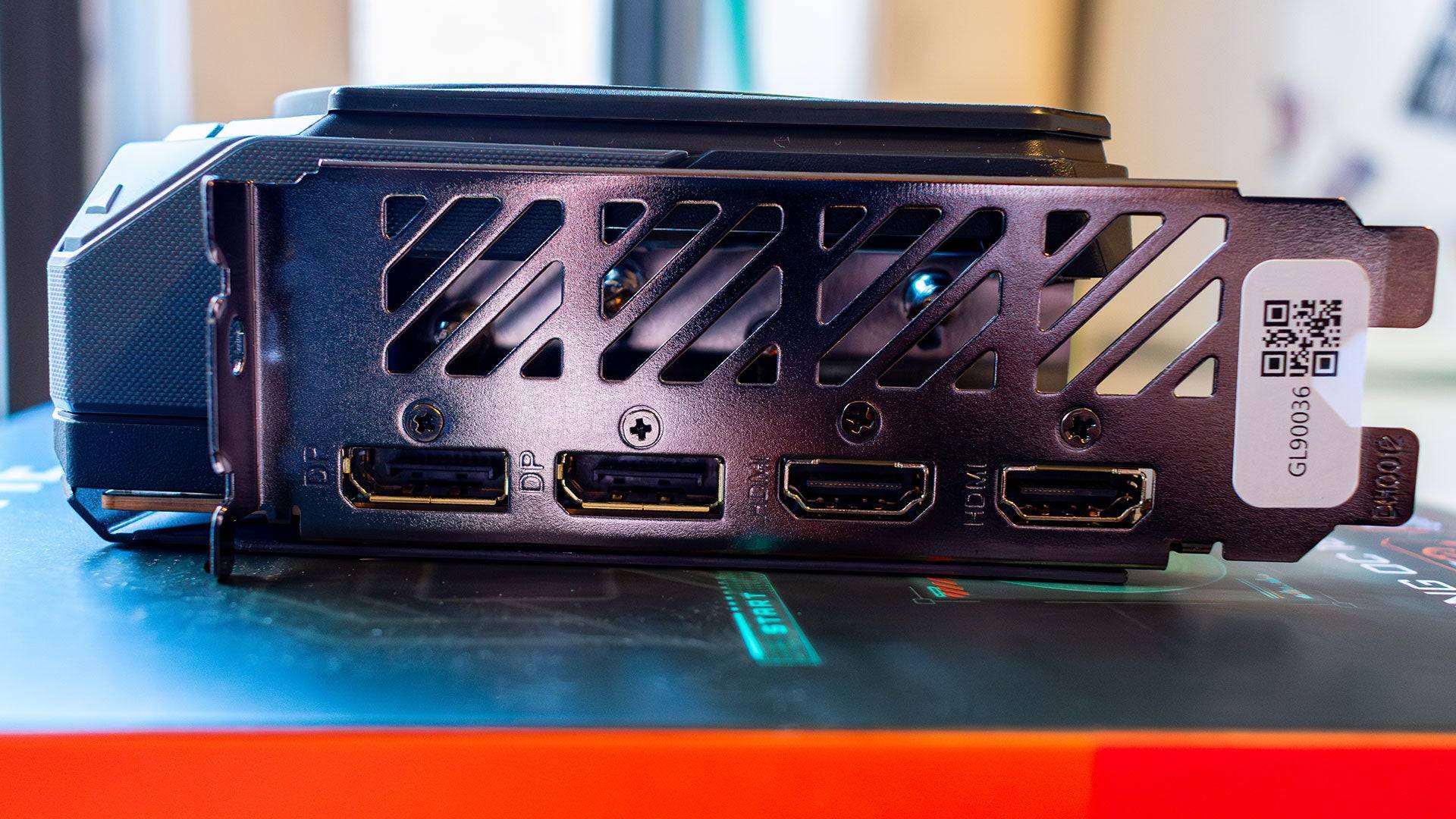
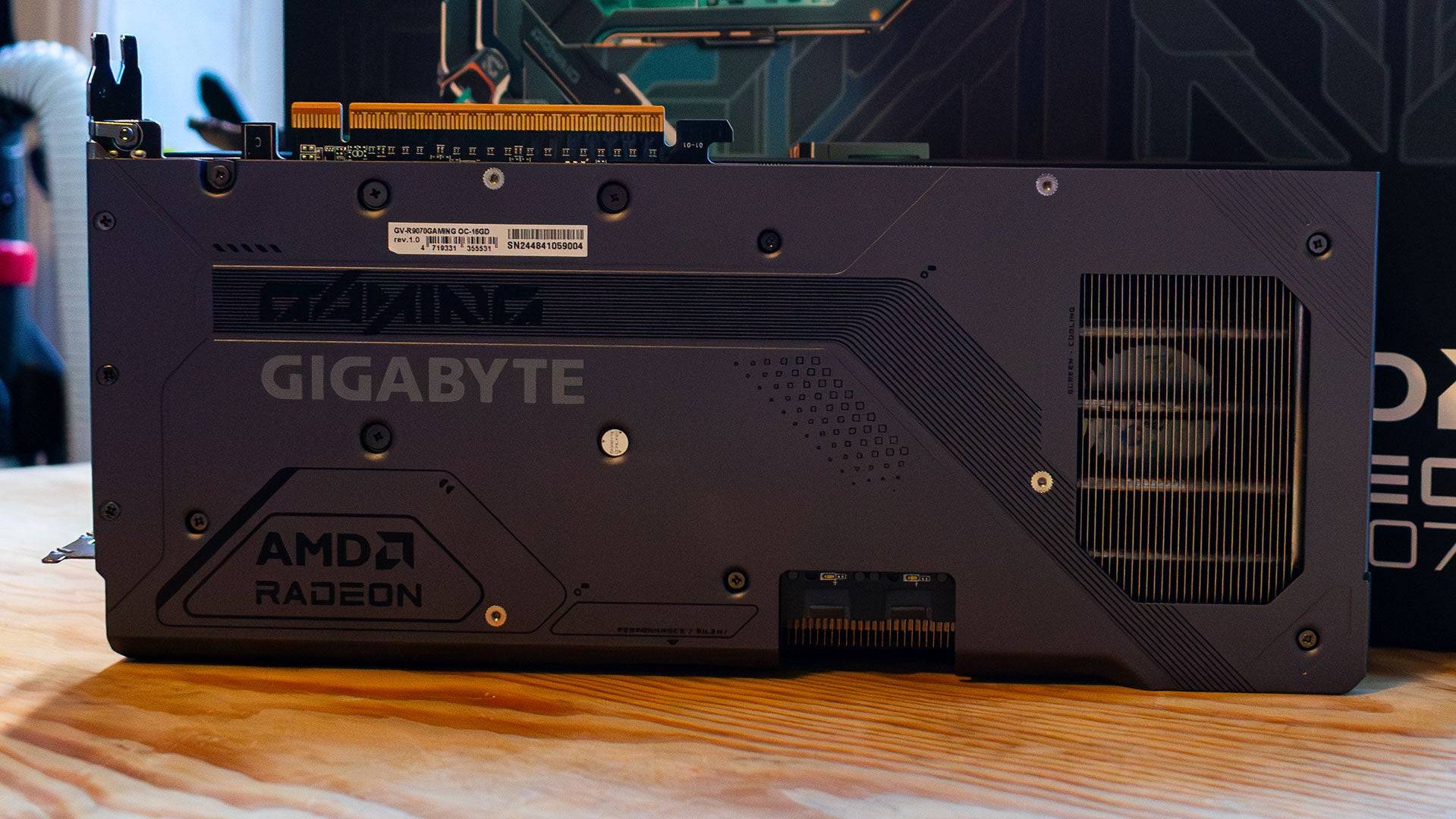
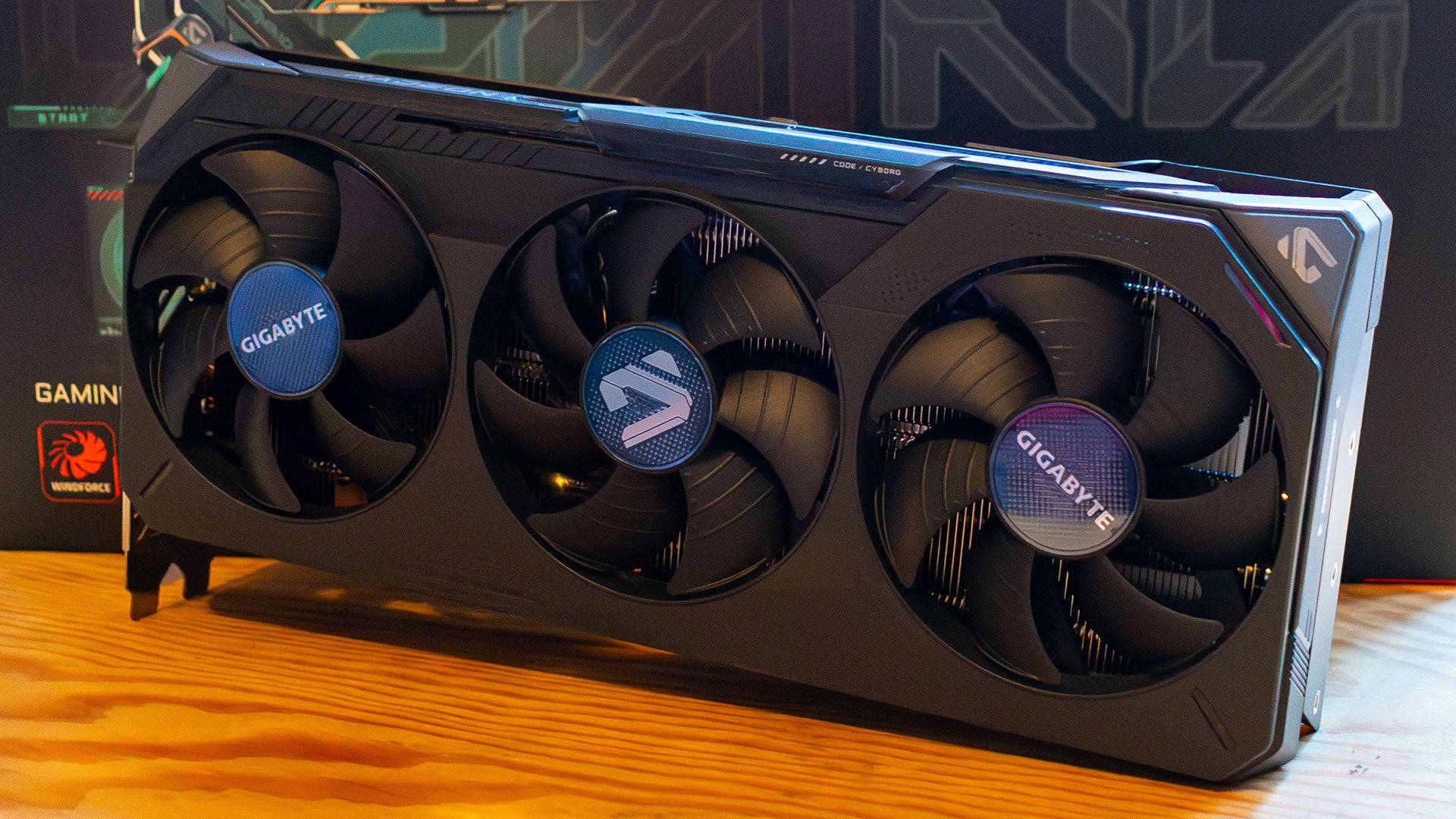
AMD Radeon RX 9070 – Photos

Specs and Features
Like its sibling, the RX 9070 XT, the RX 9070 utilizes the RDNA 4 architecture. This results in significant performance gains, surpassing the previous generation Radeon RX 7900 GRE despite having 30% fewer compute units. The card boasts 56 Compute Units, each with 64 Streaming Multiprocessors (SMs), totaling 3,584 shaders. Each compute unit includes one Ray Accelerator and two AI Accelerators, for a total of 56 and 112 respectively. These improvements, particularly to ray tracing and AI acceleration, allow the RX 9070 to compete effectively in ray-traced games. Furthermore, the enhanced AI Accelerators enable FidelityFX Super Resolution (FSR) 4, marking AMD's debut in AI upscaling.
The RX 9070 features 16GB of GDDR6 VRAM on a 256-bit bus—similar to the 7900 GRE and sufficient for 1440p gaming for several years. While GDDR7 would have been a welcome addition, it likely would have increased the price. AMD recommends a 550W power supply (though testing showed a peak of 249W, suggesting a 600W PSU for safety). Importantly, unlike previous generations, AMD isn't releasing a reference design; all versions will be from third-party manufacturers. My testing used the Gigabyte Radeon RX 9070 Gaming OC 16G, a triple-slot card with a factory overclock.
FSR 4
Since DLSS's rise in 2018, AI upscaling has become crucial for performance enhancement without significant image quality loss. FSR 4 finally brings this capability to AMD GPUs. It utilizes previous frames and in-game data through an AI model to upscale lower-resolution images to the native resolution. This differs from FSR 3's temporal upscaling, which lacked an AI algorithm, resulting in artifacts. While FSR 4 introduces a slight performance penalty compared to FSR 3 due to the AI processing, the Adrenalin software allows users to choose between the improved image quality of FSR 4 or the slightly better performance of FSR 3.
AMD Radeon RX 9070 XT & 9070 – Benchmarks
Performance
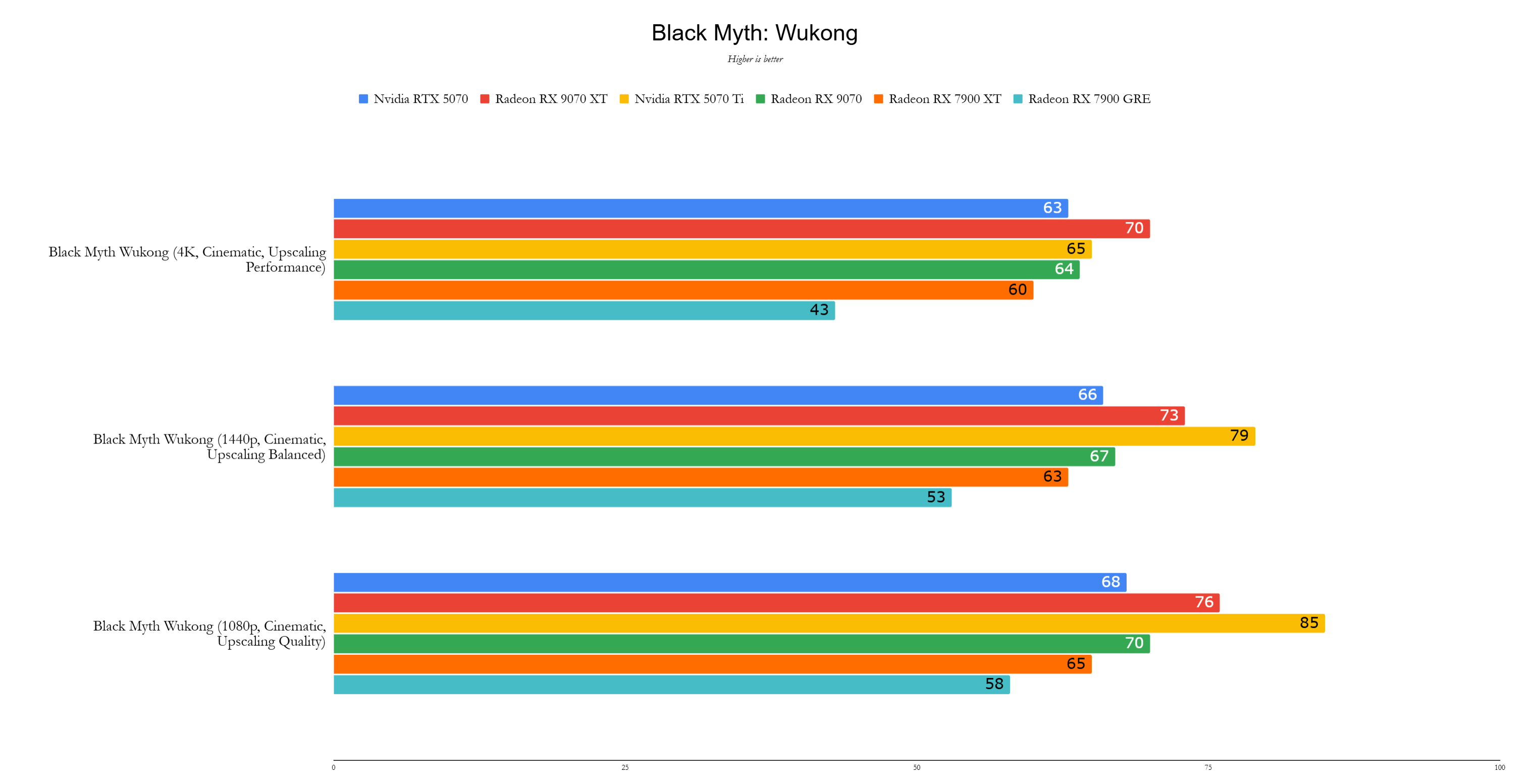
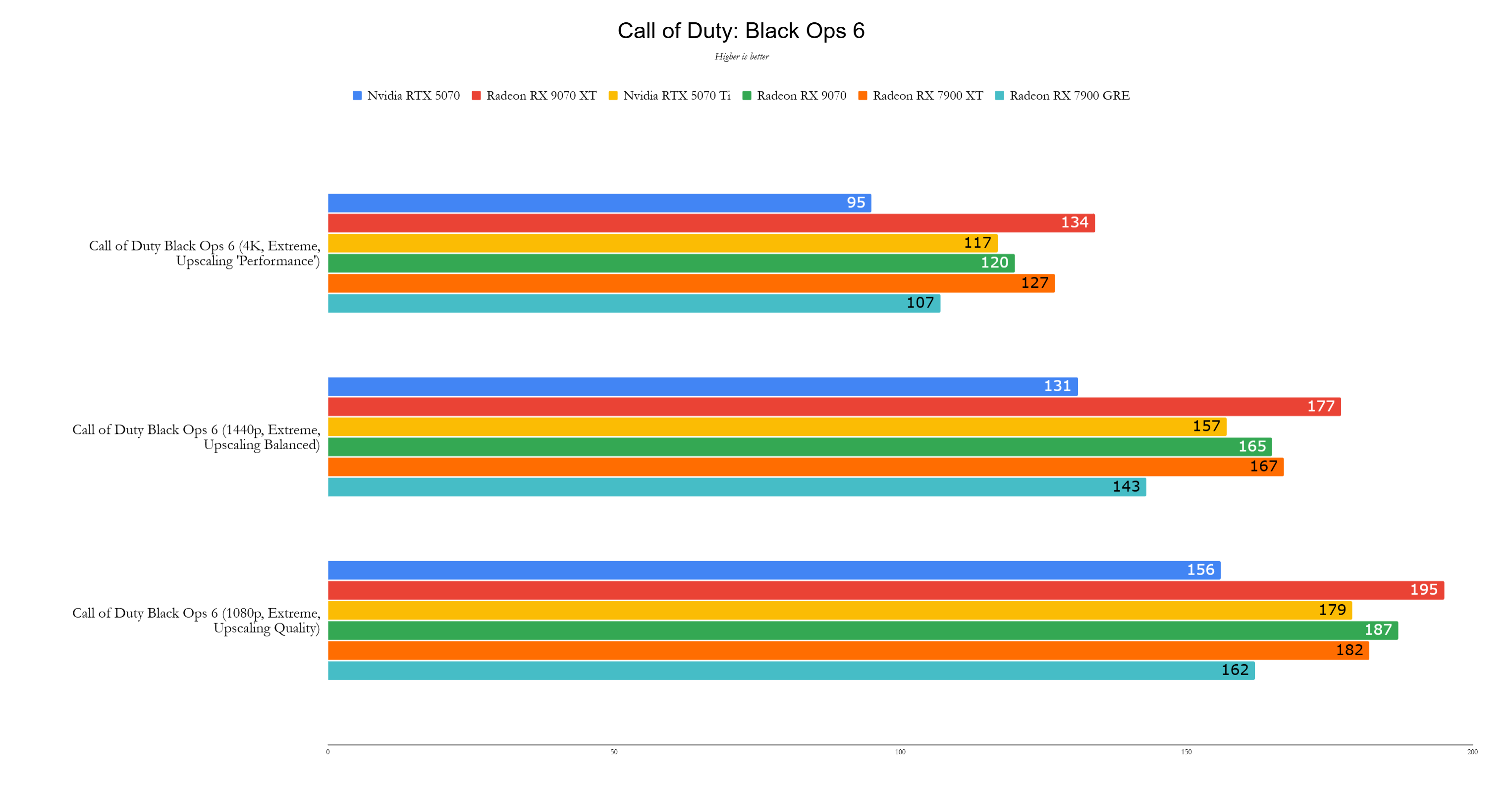
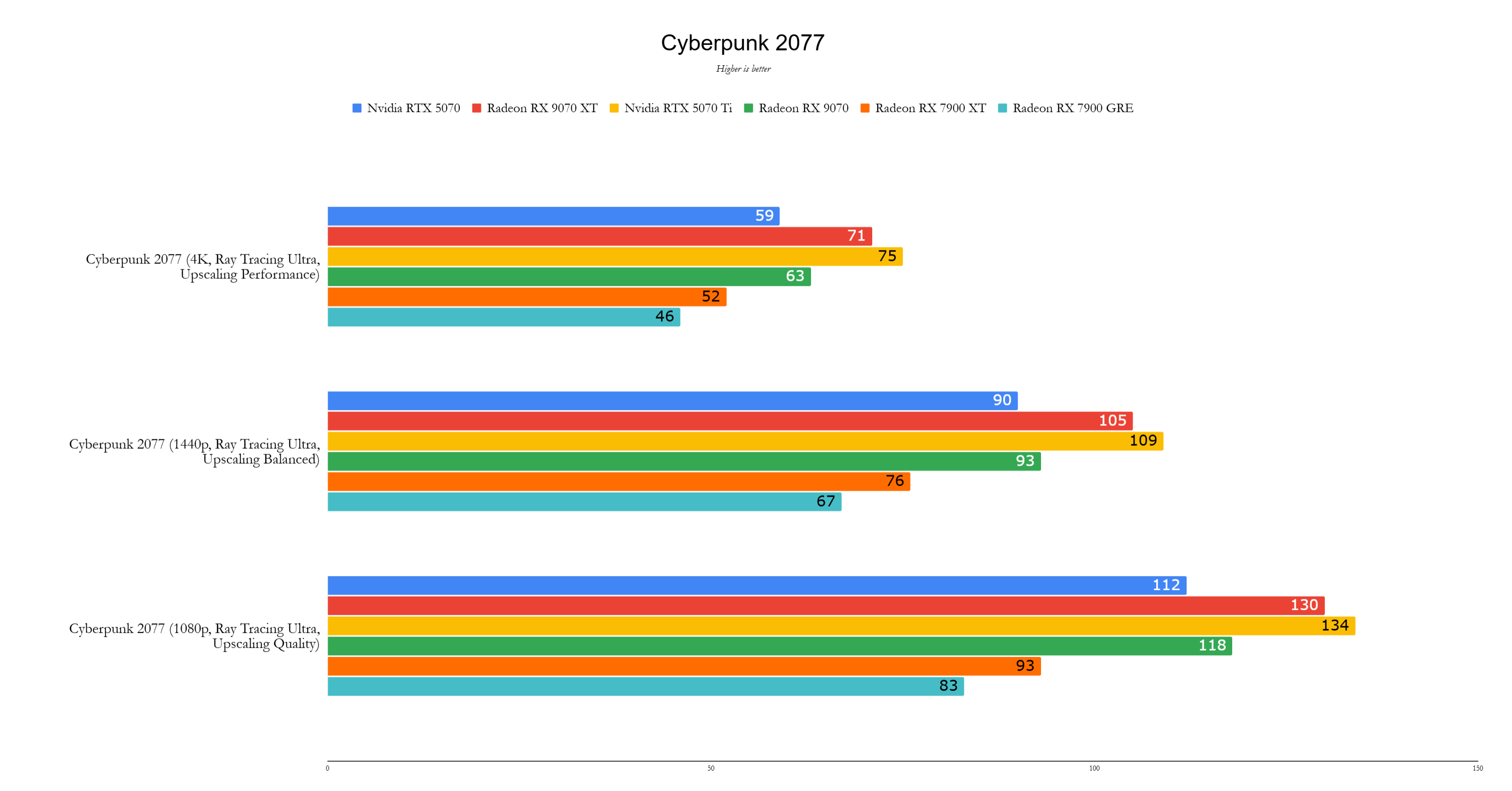
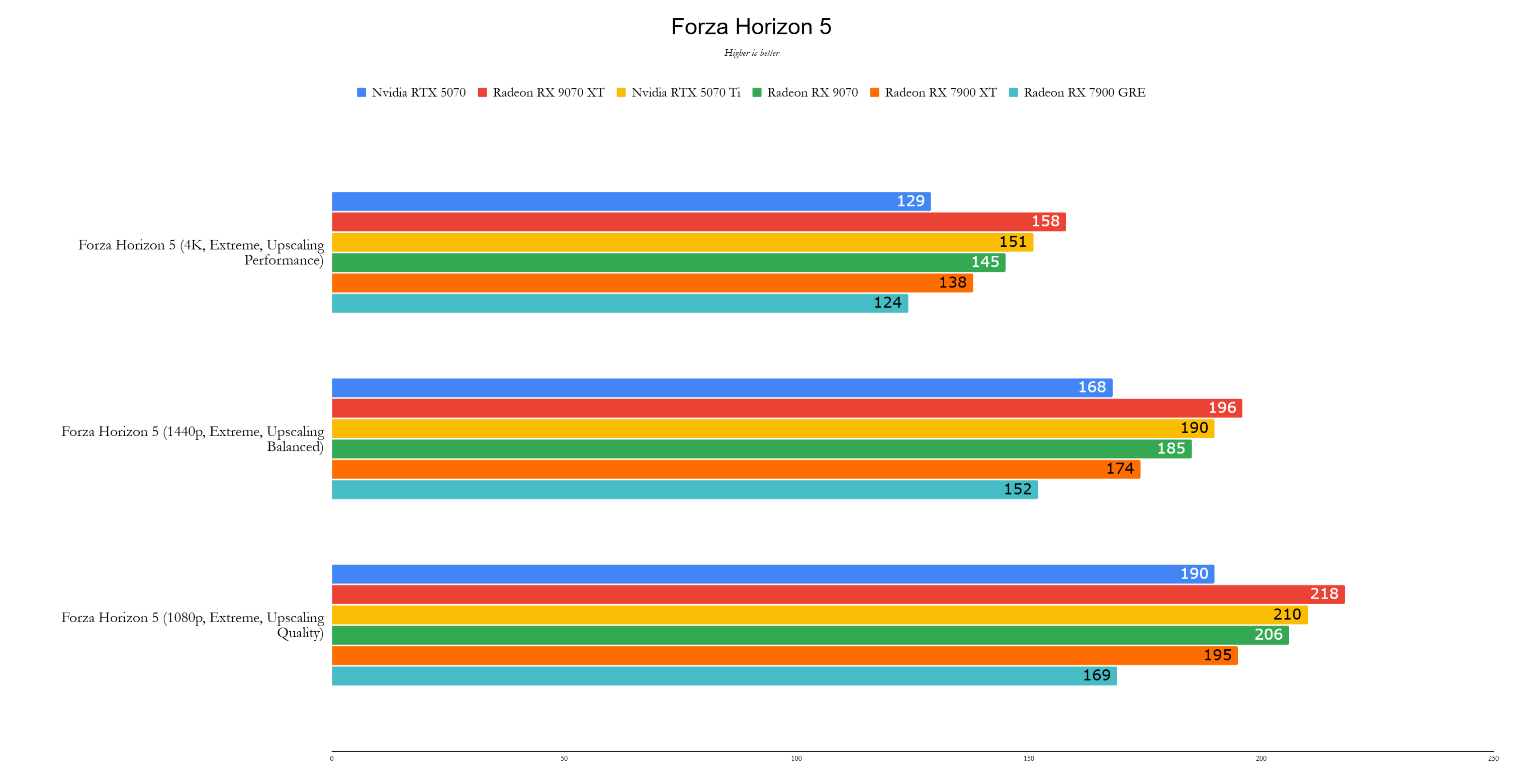
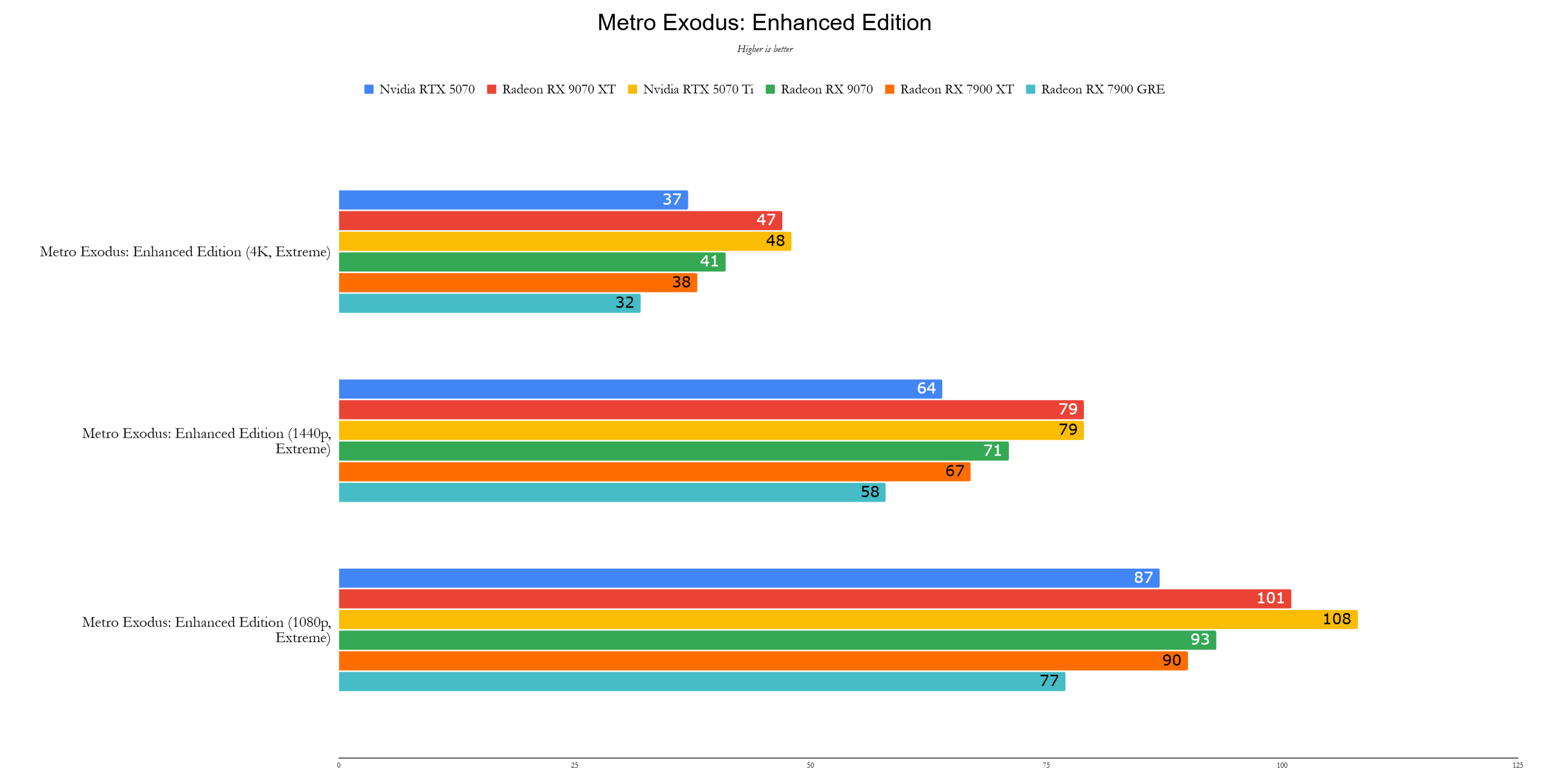
Priced identically to the Nvidia GeForce RTX 5070, the AMD Radeon RX 9070 consistently outperforms it at 1440p, showing an average 12% lead. It also significantly surpasses the RX 7900 GRE (22% faster) despite having 30% fewer cores. Note that the tested RX 9070 was a factory-overclocked version (approximately 7% clock speed boost, translating to a 4-5% performance increase). Testing utilized current public drivers (Nvidia Game Ready driver 572.60 and AMD Adrenalin 24.12.1, with review drivers for the RX 9070, 9070 XT, and RTX 5070).
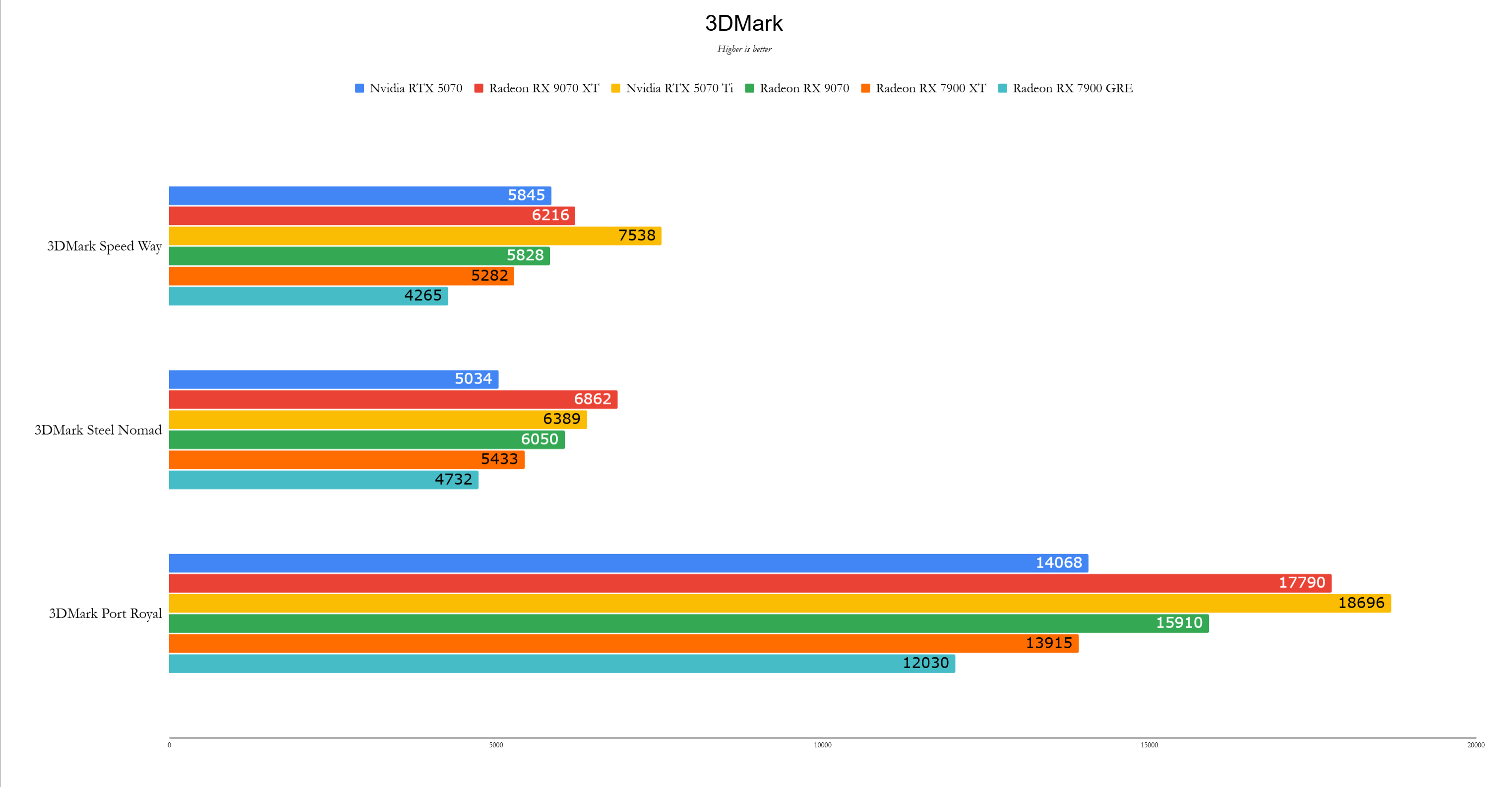
The RX 9070 shows strong performance in various benchmarks. In 3DMark Speed Way (ray tracing enabled), it nearly matches the RTX 5070; however, in Steel Nomad (no ray tracing), it achieves a 20% lead. In games, the RX 9070 often outperforms the RTX 5070 significantly, notably in *Call of Duty: Black Ops 6*, *Cyberpunk 2077*, *Metro Exodus*, and *Red Dead Redemption 2*. While *Total War: Warhammer 3* shows a close competition at 1440p, and *Black Myth Wukong* results in a near tie, the RX 9070 demonstrates superior performance in *Assassin's Creed Mirage* and *Forza Horizon 5*. The 16GB VRAM of the RX 9070 provides a significant advantage for future-proofing, even considering the slightly slower GDDR6 memory compared to the RTX 5070's GDDR7.
The RX 9070's strong performance against the RTX 5070 at the same price point, combined with its larger VRAM capacity, makes it a compelling choice for gamers. Even if performance were perfectly matched, the extra VRAM would still give the RX 9070 the edge.
Test System: CPU: AMD Ryzen 7 9800X3D; Motherboard: Asus ROG Crosshair X870E Hero; RAM: 32GB G.Skill Trident Z5 Neo @ 6,000MHz; SSD: 4TB Samsung 990 Pro; CPU Cooler: Asus ROG Ryujin III 360
-
 ATHENA: Blood Twins masterfully blends high-speed combat with a rich narrative, featuring fluid hack-and-slash mechanics, customizable skill trees, and an intricate weapon mastery system. Adventurers will journey through haunting gothic landscapes—raAuthor : Ava Mar 13,2026
 -
 RuneScape's April Developer Diary has arrived, detailing the latest update: "Return to the Desert: Pharaoh's Folly." This brand-new quest launches today and will be available until April 28th. Your mission is to survive the treacherous Shifting TombsAuthor : Andrew Mar 12,2026
-
 4 Pics Association Word PuzzleDownload
 -
 Win68Download
 -
 Kitty LetterDownload
 -
 SwingShotDownload
 -
 The Seven Realms 3Download
 -
 Curse of the Night Stalker - Chapter 3 releaseDownload
 -
 My Home Design: My House GamesDownload
 -
 100+ RiddlesDownload
 -
 Elite PokerDownload
 -
 Sinful Summer: A Tale of ForbiddenDownload











- HoYo Fest 2025: Fresh Updates on Comeback
- Mastering Two-Handed Weapons in Elden Ring: A Guide
- Ultimate Guide to Shinigami Progression in Hollow Era
- Roblox Simulator Codes: Unlock Exclusive Rewards!
- Wuthering Waves: Uncover the Secrets of Whisperwind Haven's Palette
- Top 25 Palworld Mods to Enhance Your Game