
Lost Dune Script Unearthed, Sparks Fan Curiosity
Ridley Scott's Lost Dune: A 40-Year-Old Script Unveiled
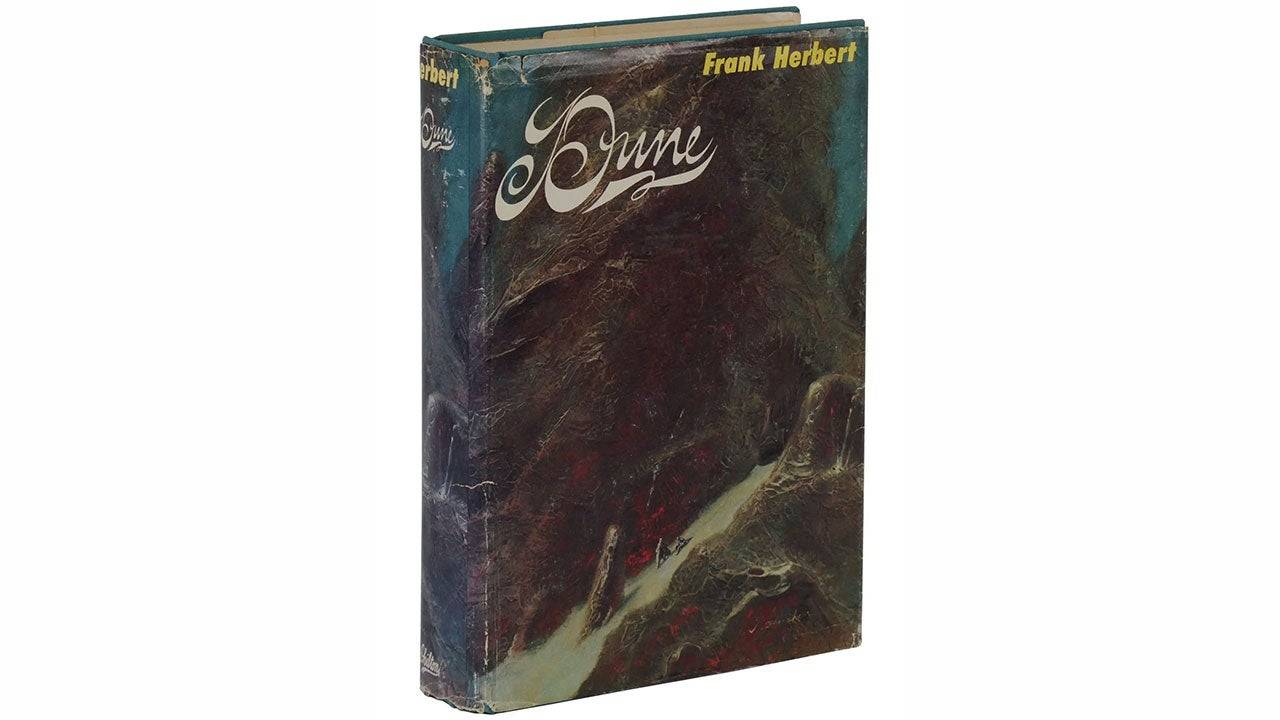
This week marks four decades since David Lynch's Dune premiered, a box office flop that later garnered a devoted cult following. This stands in stark contrast to Denis Villeneuve's recent big-screen adaptation of Frank Herbert's iconic novel. Ridley Scott's involvement, before Lynch took the helm, has remained largely shrouded in mystery—until now.
A 133-page draft of Scott's abandoned Dune script, penned by Rudy Wurlitzer in October 1980, has surfaced. This discovery, thanks to T.D. Nguyen, within the Coleman Luck archives at Wheaton College, offers unprecedented insight into Scott's vision.
Frank Herbert's initial screenplay, while faithful, proved too unwieldy for cinematic adaptation. Scott, after Harlan Ellison declined the project, engaged Wurlitzer for a complete rewrite. The resulting script, like Herbert's and Villeneuve's versions, was envisioned as the first part of a two-film saga.
Wurlitzer described the project as incredibly challenging, stating that structuring the narrative consumed more time than writing the script itself. Scott himself later described the script as "pretty fucking good."
Several factors contributed to the project's demise: Scott's grief following his brother's death, his reluctance to film in Mexico (De Laurentiis's demand), a ballooning budget exceeding $50 million, and the allure of Universal's Blade Runner project. However, a key factor, as revealed in A Masterpiece in Disarray – David Lynch's Dune, was the script's lack of universal acclaim among Universal executives.
This newly discovered script presents a significantly different Dune than either of the existing film versions.
A Darker Paul Atreides
The script opens with a dream sequence depicting apocalyptic warfare, foreshadowing Paul's destiny. The visual descriptions are strikingly evocative of Scott's signature style. Paul Atreides is depicted not as the young adult portrayed by Timothée Chalamet, but as a seven-year-old boy, undergoing a trial by pain. This version of Paul displays a "savage innocence" and a remarkable assertiveness, quickly surpassing Duncan Idaho in swordsmanship.
The Emperor's Demise
A pivotal plot point introduces the Emperor's death as the catalyst for the events of the story, a significant departure from the source material. The scene of the Emperor's funeral, held in a mystical setting, is rich in visual detail. The Baron Harkonnen's offer to share Arrakis' spice production, and his famous line ("He who controls the spice controls the universe"), appears in a slightly altered form.
The Guild Navigator
The script features a detailed depiction of the Guild Navigator, a spice-addicted being, presented visually before its appearance in later books. The Navigator's method of plotting hyperspace routes through musical intonations foreshadows elements of Scott's Prometheus.
A Grittier Arrakis
The Atreides' arrival on Arrakis is portrayed with a medieval aesthetic, showcasing the ecological devastation caused by spice mining. The depiction of Arakeen as a squalid city, rife with poverty and class disparity, is far more pronounced than in previous adaptations. A new action sequence features a bar fight, showcasing Paul's fighting prowess. The introduction of Stilgar and the Fremen is also depicted with a heightened sense of brutality.
A Violent Escape
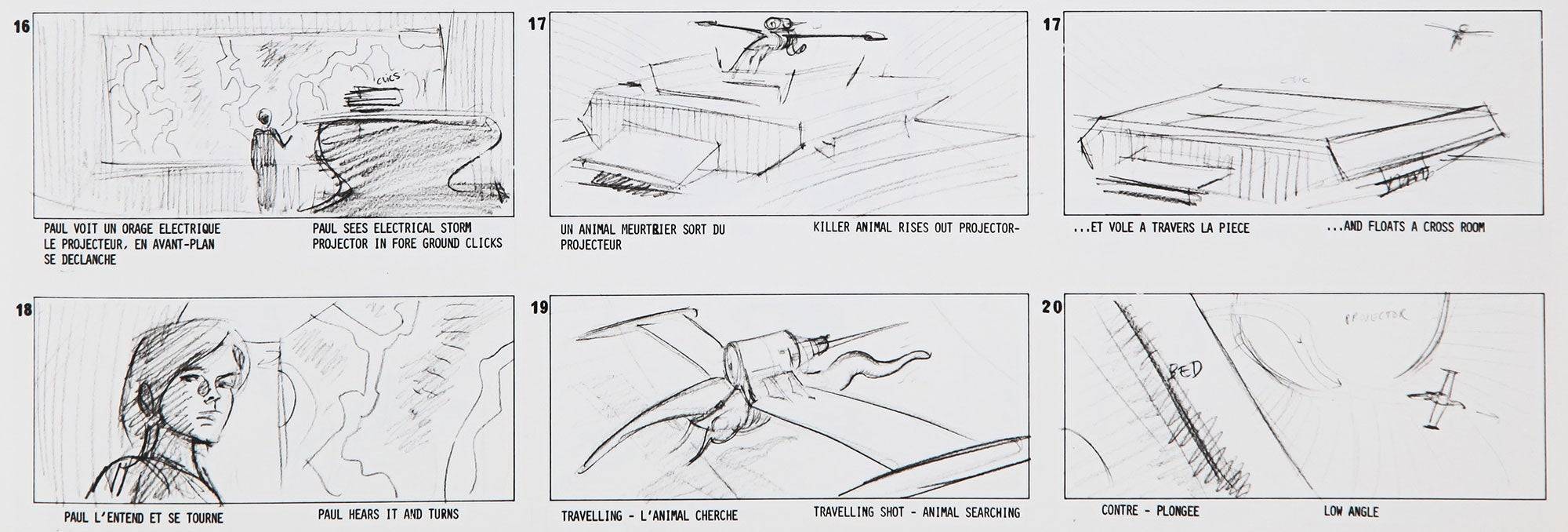
The Atreides' escape from Arrakeen is a brutal, action-packed sequence. The Hunter-Seeker is reimagined as a bat-like creature, echoing elements of Jodorowsky's unmade Dune. The script features graphic violence, including multiple beheadings and the death of Duncan Idaho. The omission of the incestuous relationship between Paul and Jessica is notable, a change that reportedly angered both Herbert and De Laurentiis.
The Deep Desert
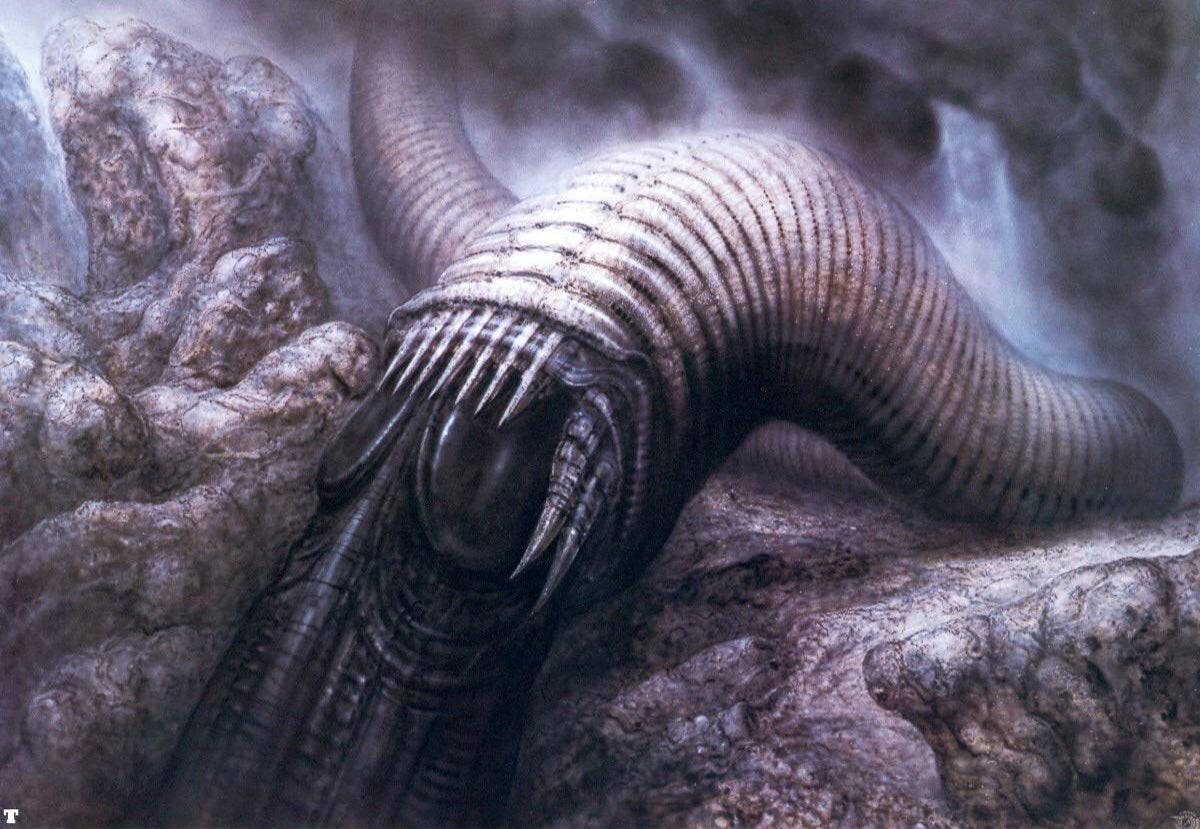
The journey across the desert is equally intense, with a thrilling crash landing and a close encounter with a sandworm. The Fremen culture is depicted with a focus on their ecological knowledge and spiritual practices. The duel between Paul and Jamis mirrors elements of Lynch's version but is even more brutal. The script culminates in a Water of Life ceremony, featuring a shamanistic figure and a giant sandworm, ending with Paul and Jessica's acceptance into the Fremen tribe.
A Different Paul
This version of Paul is far less reluctant and more assertive, almost a ruthless leader willing to make sacrifices to achieve his goals. This contrasts with the more hesitant Paul in Lynch's and Villeneuve's films.
Conclusion
Scott and Wurlitzer's Dune script offers a darker, more violent, and politically charged interpretation of Herbert's novel. While it deviates significantly from the source material, it also presents a unique vision, emphasizing the ecological and political aspects of the story. The script's failure to gain widespread approval likely stemmed from its grim tone and significant departures from the source material. However, its unique approach to the story and its visual richness make it a fascinating piece of cinematic history. The script's enduring legacy lies in its bold attempt to translate Herbert's complex themes onto the screen, showcasing a vision of Dune that remains strikingly original. The script's focus on ecological issues and political intrigue remains remarkably relevant even today.
-
 East Side Games Group is merging two wildly different universes in an exhilarating crossover. Trailer Park Boys: Greasy Money is joining forces with All Elite Wrestling: Rise to The Top. This special event begins on March 27th at 2:00 PM PT, deliveriAuthor : Sarah Mar 17,2026
 -
 After years of speculation about The Sims 5, EA is charting a bold new course for the franchise. Instead of traditional numbered sequels, the company plans to expand "The Sims Universe" with ongoing updates across multiple titles.EA Plans on ExpandinAuthor : Samuel Mar 16,2026
-
 Airport Clash 3D - Minigun ShoDownload
 -
 A RecreativaDownload
 -
 com.crikey.dreamcarnival ModDownload
 -
 تحدي ام حقيقةDownload
 -
 Madden NFL 25 CompanionDownload
 -
 Survivor Z: Zombie SurvivalDownload
 -
 Dinosaur Hunting: Trex HunterDownload
 -
 Z書庫Download
 -
 Word Game. Crossword Search PuDownload
 -
 Buckshot Roulette: PvP DuelDownload










- Classic WoW vs. Turtle WoW: 6 Key Differences
- Ultimate Guide to Shinigami Progression in Hollow Era
- Roblox Simulator Codes: Unlock Exclusive Rewards!
- Mastering Two-Handed Weapons in Elden Ring: A Guide
- Wuthering Waves: Uncover the Secrets of Whisperwind Haven's Palette
- Top 25 Palworld Mods to Enhance Your Game