
GTA 6 Price Concerns as PlayStation Costs May Rise
Xbox has announced a series of price increases for its consoles and accessories, along with a confirmed rise in game prices to $80 USD set for later this year. The impact of this news is substantial and broad-reaching, with implications that are still unfolding—affecting not only prices for third-party games but also potentially influencing PlayStation consoles.
It’s no exaggeration to say gaming is now more expensive than at any time since the 1990s. Microsoft revealed that its entry-level console, the Xbox Series S with just over 500GB storage, now costs $380 USD. That puts it less than $20 below the PlayStation 5 Slim Digital Astro Bot bundle on the PlayStation store. Meanwhile, the 2TB Xbox Series X is priced at $729—roughly $30 more than the PS5 Pro.
This Xbox decision follows Nintendo’s Switch 2 reveal, which sent shockwaves not just because of the $450 console price, but also due to $80 price tags for select first-party games like Mario Kart World. Nintendo, which had kept its games at $60, skipped the $70 price point adopted earlier this generation by Xbox and PlayStation (a move that itself sparked backlash) and jumped directly to $80. Now Xbox will follow suit this holiday season, as its first-party titles also reach that level—and it’s hard to imagine the trend stopping there.
Will PlayStation Games Rise to $80?
All attention is on Sony to see if it will follow Nintendo and Xbox, but it seems almost certain that price hikes will be announced in the coming weeks. Escalating manufacturing costs and tariffs resulting from the US trade war mean Sony must adjust prices to reflect today’s economic conditions.
Even if Sony were less affected by tariffs than Microsoft—which appears to be a driving force behind Xbox’s price rise—the company commands more successful hardware, and not matching competitor pricing would mean leaving revenue opportunities untapped.
Beyond console pricing, it is especially likely Sony will increase the cost of its first-party PlayStation games. The company has frequently emphasized the unique value of its game catalog as a premium entertainment experience. With its first-party titles consistently achieving both critical acclaim and strong sales, Sony is unlikely to position them as lower in value than those from Xbox. So if Xbox is raising prices, it’s expected Sony will do the same.
Sony has precedent in valuing its first-party IP highly. The company held firm on its $70 pricing for Housemarque’s Returnal, despite criticism from fans accustomed to the studio’s smaller digital offerings. Given the immense production costs of Sony’s marquee games, an $80 price tag feels unavoidable.
The End of Physical Games
Beyond rising console and game prices, these changes highlight an opportunity for companies to accelerate a long-term goal: shifting toward subscription services and digital game sales, and phasing out physical media.
Digital games and subscription platforms run by companies like PlayStation and Xbox generate higher revenue than physical media and pre-owned game sales. This explains the significant investments in services such as PlayStation Plus and Xbox Game Pass. While Xbox Game Pass isn’t seeing an immediate price hike (it already increased in mid-2024), the $80 price point for new Xbox games could enhance its perceived value for budget-conscious consumers, who stand to save significantly by subscribing rather than purchasing individual titles.
As a physical media enthusiast, I’ve observed this push toward digital platforms with concern. The increasing cost of physical games may hasten the arrival of an all-digital future sooner than expected.
What Does This Mean for GTA 6 and Other Publishers?
The barriers are completely gone. Even before the trade war and since the pandemic subsided in 2023, the gaming industry has faced shrinking profits and rising development expenses. Industry experts and analysts have long questioned whether current pricing for games and consoles was sustainable—and now we see the result in higher costs for consoles such as the PS5 Pro and Switch 2, as well as for first-party games.
With market leaders moving firmly toward higher prices, the final indicator of whether this is a temporary change or a lasting trend may come with GTA 6 (expected in 2026).
The notion that Grand Theft Auto 6 might launch at $100 started as analyst speculation but has gained momentum across the industry. After investing billions of dollars and over a decade in development, Take-Two is expected to maximize returns on what is arguably the most anticipated game of this generation—if not all time. Take-Two CEO Strauss Zelnick has previously stated that games are “very, very low” in price relative to the value they deliver.
When Rockstar finally confirms the Grand Theft Auto 6 launch date, I’m fully expecting it to cost at least $80. That said, not every game will adopt this price—titles like Helldivers 2 and the recent Split Fiction demonstrate strong demand for more affordable games outside the AAA blockbuster range. Many players are willing to wait for a sale rather than purchase at launch. Yet the broader trend is clear: prices are trending upward, and for most of us, that means becoming more selective about what we buy and play.
-
It's 2025, and Sony PlayStation has finally crafted its own wireless fight stick for PS5 and PC. Edwin Foo, VP of Product Development at Sony Interactive Entertainment, said the stick—internally codenamed Project Defiant—will give players "greater flAuthor : Andrew Jun 08,2026
-
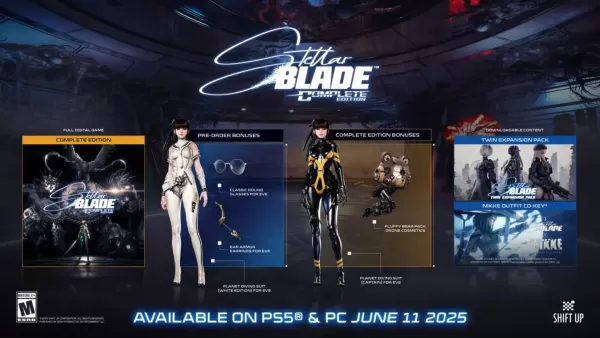 Stellar Blade launches on PC via Steam on June 11, accompanied by a host of PC-exclusive features, as revealed in a trailer that was briefly posted by Sony before being taken down.The trailer, published by Sony Interactive Entertainment on the PlayStAuthor : Logan Jun 06,2026
-
 ROYAL SLOTS CASINO: Wild Vegas Slot MachineDownload
 -
![[18+] Starlewd Valley:Re!](https://images.ydxad.com/uploads/37/173149215167347937c925c.jpg) [18+] Starlewd Valley:Re!Download
[18+] Starlewd Valley:Re!Download -
 Messy Academy (abdl diaper vn)Download
 -
 この素晴らしい世界に祝福を!ファンタスティックデイズDownload
 -
 BourreDownload
 -
 MagnoJuegos 5-EN-1Download
 -
 A Simple Life with My Unobtrusive SisterDownload
 -
 Collapse NPC RapeDownload
 -
 Hey Love Adam ModDownload
 -
 RogueMaster : Action RPGDownload









- Classic WoW vs. Turtle WoW: 6 Key Differences
- Ultimate Guide to Shinigami Progression in Hollow Era
- Roblox Simulator Codes: Unlock Exclusive Rewards!
- Mastering Two-Handed Weapons in Elden Ring: A Guide
- Wuthering Waves: Uncover the Secrets of Whisperwind Haven's Palette
- Top 25 Palworld Mods to Enhance Your Game