
SAG-AFTRA, Game Studios Still Far Apart on AI Guardrails
The Screen Actors Guild-American Federation of Television and Radio Artists (SAG-AFTRA) has provided its members with an update regarding ongoing negotiations over AI protections for video game performers. While some progress has been made, the guild reports it remains "frustratingly far apart" from the industry bargaining group on several crucial points.
The union has released a comparison chart outlining the differences between its proposals and those of the video game industry bargaining group, which includes representatives from major AAA studios. According to SAG-AFTRA, the following key issues are still unresolved:
Extending protection against digital replica or generative AI use to all existing work, not just projects initiated after the agreement takes effect.Defining "digital replica": SAG-AFTRA wants to cover any vocal or movement performance "readily identifiable or attributable to" a performer under contract. The industry group prefers "objectively identifiable," which the union argues could allow employers to exclude many performances.Including performers who provide movement capture within the scope of the generative AI agreement.Terminology for AI-created performances: SAG-AFTRA proposes "real-time generation," while the industry suggests "procedural generation"—a term the union says has a different established meaning in gaming.Whether employers must disclose if they intend to blend a performer's voice with others to create a digital replica.Whether employers must reveal if a performer's voice will power a real-time chatbot capable of generating unscripted responses, or if it will only deliver pre-written dialogue.Revoking consent for digital replica use during strikes: SAG-AFTRA wants to withdraw consent when the union strikes, while employers seek to continue using replicas, including on struck projects.Duration of consent for real-time generation: The union proposes a five-year term requiring renewal, whereas the industry seeks perpetual consent for unlimited dialogue.Minimum payment rates for digital replica creation and use. While the sides disagree on several aspects, they have tentatively agreed on bonus pay calculations.The industry group is proposing a premium-pay option similar to the SAG-AFTRA TV/film agreement, granting employers scheduling flexibility and other benefits. The union finds the current proposal overly broad and potentially undermining of union rights, but is open to discussing a more narrowly defined version.Implementing a system to monitor how and how often digital replicas are used to ensure proper compensation. The industry group considers this unfeasible and is only willing to explore it as a discussion topic.Defining and regulating "synthetic" performers—characters entirely generated by AI systems.
Although this list is substantial, the chart also shows that the two sides have reached tentative agreements on other matters, including bonus pay, dispute resolution, certain minimum compensation elements, consent requirements, and performer disclosures. However, SAG-AFTRA's member communication expresses concern that employers are mistakenly suggesting a deal is near, which the union disputes. As SAG-AFTRA national executive director and chief negotiator Duncan Crabtree-Ireland stated in the message:
As pre-strike projects move slowly through production, employers are feeling pressure from the work stoppage. SAG-AFTRA video game members remain united in refusing work without proper safeguards. This has led employers to seek other performers, including those outside the games industry, to fill these roles. If you are approached for such work, we urge you to carefully consider the implications. Not only would you be undermining your fellow members' efforts, but you would be risking your own career by working without AI misuse protections. And "AI misuse" is simply a polite term for companies using your performance to replace you—without your consent or fair compensation.
In reply, Audrey Cooling, spokesperson for the video game industry bargaining group, issued this statement:
We have put forward a proposal that includes wage increases exceeding 15% for SAG-AFTRA performers in video games, along with improved health and safety measures, leading AI digital replica terms for in-game use, and extra compensation for reuse of performances in other titles. We have achieved meaningful progress and are ready to resume negotiations to finalize an agreement.
The SAG-AFTRA video game strike is now in its eighth month, initially called due to disagreements over AI protections after both sides agreed on 24 out of 25 other contract items. While early effects were subtle, impacts are becoming more visible across the industry. Players have noted that some ongoing games like Destiny 2 and World of Warcraft now feature unvoiced NPCs in scenes that previously included dialogue, likely due to the strike. Late last year, SAG-AFTRA struck League of Legends after Riot Games allegedly canceled a project in response to the strike, and Activision confirmed recasting Call of Duty: Black Ops 6 characters following fan concerns about new voice actors.
Just today, two voice actors for Zenless Zone Zero disclosed they discovered they had been replaced after reading the game's latest update notes.
-
It's 2025, and Sony PlayStation has finally crafted its own wireless fight stick for PS5 and PC. Edwin Foo, VP of Product Development at Sony Interactive Entertainment, said the stick—internally codenamed Project Defiant—will give players "greater flAuthor : Andrew Jun 08,2026
-
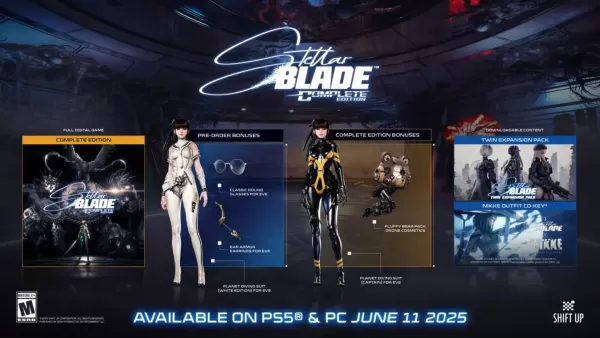 Stellar Blade launches on PC via Steam on June 11, accompanied by a host of PC-exclusive features, as revealed in a trailer that was briefly posted by Sony before being taken down.The trailer, published by Sony Interactive Entertainment on the PlayStAuthor : Logan Jun 06,2026
-
 ROYAL SLOTS CASINO: Wild Vegas Slot MachineDownload
 -
![[18+] Starlewd Valley:Re!](https://images.ydxad.com/uploads/37/173149215167347937c925c.jpg) [18+] Starlewd Valley:Re!Download
[18+] Starlewd Valley:Re!Download -
 Messy Academy (abdl diaper vn)Download
 -
 この素晴らしい世界に祝福を!ファンタスティックデイズDownload
 -
 BourreDownload
 -
 MagnoJuegos 5-EN-1Download
 -
 A Simple Life with My Unobtrusive SisterDownload
 -
 Collapse NPC RapeDownload
 -
 Hey Love Adam ModDownload
 -
 RogueMaster : Action RPGDownload








- Classic WoW vs. Turtle WoW: 6 Key Differences
- Ultimate Guide to Shinigami Progression in Hollow Era
- Roblox Simulator Codes: Unlock Exclusive Rewards!
- Mastering Two-Handed Weapons in Elden Ring: A Guide
- Wuthering Waves: Uncover the Secrets of Whisperwind Haven's Palette
- Top 25 Palworld Mods to Enhance Your Game