
Blumhouse Head on M3GAN 2.0's Box Office Flop
Blumhouse chief Jason Blum has spoken out about the disappointing debut of M3GAN 2.0, acknowledging several missteps.
During its opening weekend, M3GAN 2.0 earned $10.2 million domestically and a mere $6.958 million internationally. These figures suggest that the original M3GAN film, released in December 2022, may have been a unique phenomenon, eventually grossing $180 million worldwide.
IGN’s M3GAN 2.0 review gave the film a score of 6/10. Our review stated: “M3GAN 2.0 trades horror for sci-fi and action with mixed success. However, M3GAN's sharp wit and killer dance moves ensure she remains the star of the show, not the new genres.”
So, what caused M3GAN 2.0 to underperform so significantly? Blumhouse Productions CEO Jason Blum shared his initial thoughts on the latest episode of The Town with Matthew Belloni podcast.
“It's been a painful weekend, and I've been overanalyzing everything,” Blum admitted during the 20-minute conversation. “If Blumhouse is in a slump, I want to be the one to tell that story. I don't want others controlling the narrative.”
Blum revealed that ten weeks before the release, M3GAN 2.0 was projected to open with $45 million. “We were seriously discussing how incredible it would be for our small film, M3GAN, to outperform F1.” However, those forecasts quickly declined. With eight weeks to go, projections dropped to $40 million; at six weeks, $35 million; and at four weeks, $30 million. “The first film opened with $32 million,” Blum noted. “We thought a 20% drop from the first movie was reasonable, so $30 million seemed solid. The same logic applied internationally.”
He continued: “Just five days before the opening, the projection fell from $30 million to $20 million. That was on Monday, and I was upset. By Thursday, we were looking at maybe $19 million, and I was in a deep slump. Then Monday morning arrives, and it's just $10 million.”
M3GAN 2.0 Gallery
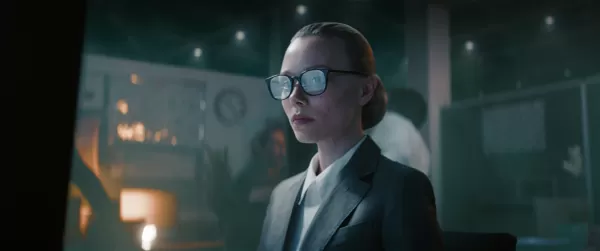
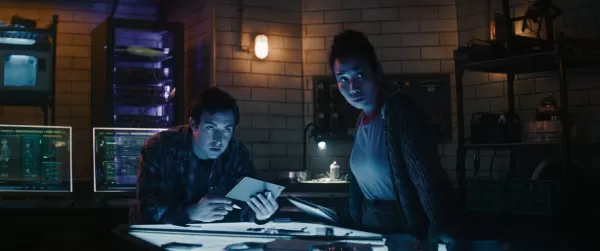
View 12 Images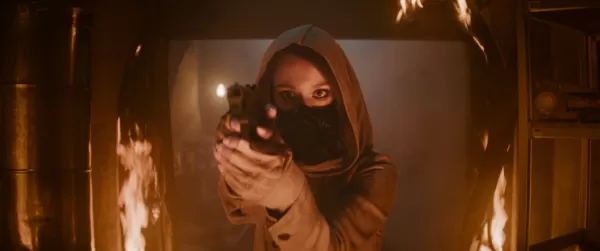
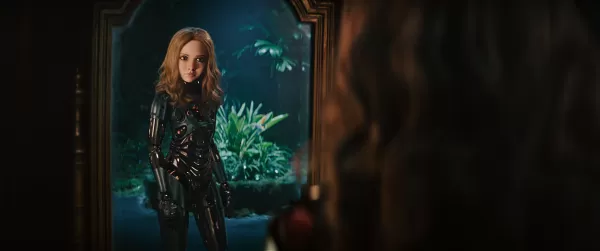
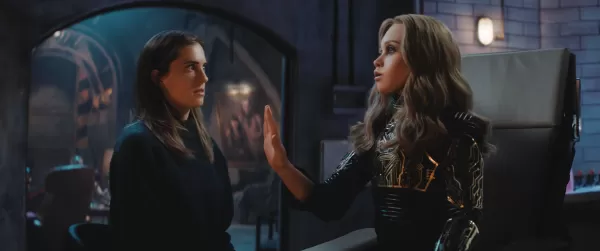
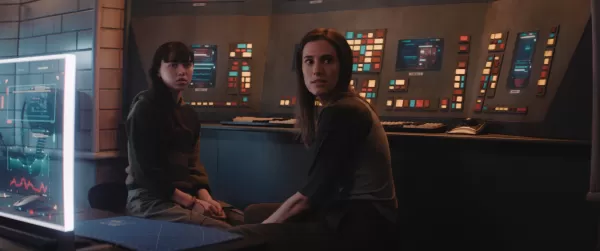
Blum then delved into the details of M3GAN 2.0’s opening weekend performance.
“We all thought M3GAN was like Superman,” he remarked. “We believed we could do anything with her. We could change genres, release her in the summer, alter her appearance, or even turn her from villain to hero. We overestimated the strength of the audience's connection to her.
“We decided to switch genres. The audience wasn't ready for that change. They wanted more of the M3GAN they already knew and loved.”
This refers to M3GAN 2.0 shifting from a thriller-horror, like the first film, to more of an action-comedy—a move that clearly backfired.
“Secondly, we thought she could succeed in a summer release,” Blum added. “We envisioned transforming a modest horror movie into a major tentpole."
This change in release window also proved unsuccessful.
“When you switch genres, the execution must be flawless," Blum stated. "This M3GAN actually received a higher CinemaScore than the last one. Those who did see it really enjoyed it. Critics, however, were more divided, with reviews slightly less favorable than for the first film.”
Blum also suggested that the tighter production schedule for the sequel, directed by Gerard Johnstone to meet the summer release, was a factor compared to the first movie.
“We got overly excited about M3GAN, and ultimately, the formula didn't work,” Blum concluded. “That’s the reality.”
The Best Horror Movie of 2023

View 4 Images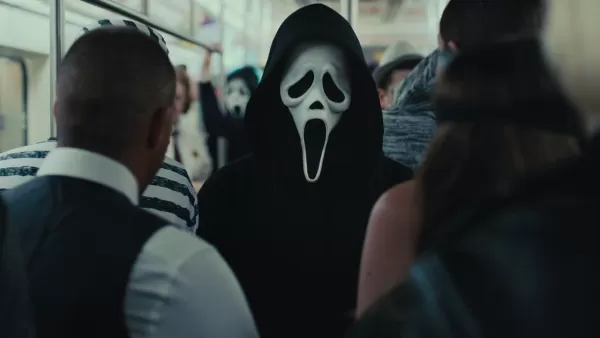
So, what's next? Blum said he isn't having an existential crisis about Blumhouse or the film industry, but confirmed the company is reevaluating its upcoming releases. He also expressed his view that the current market is oversaturated with horror content.
“We're accustomed to a market that can support 12 to 15 horror films, where you get consistent modest returns,” he explained. “I believe that era is over, for now. It might return, but currently, the market simply can't absorb much more than what's already there.”
Another strategy is to make Blumhouse films more of a theatrical event to stand out, which in turn requires higher budgets. Blum cited the upcoming Five Nights at Freddy’s sequel as an example of this approach.
“I'm not having an existential crisis about it,” he reiterated. “But you can't ignore the signs. We need to examine our slate. Are we releasing too many films this year? Should every movie be a theatrical event? That's a different benchmark than we used a year ago. If we kept using the old criteria, then yes, it would be a crisis because I believe we'd be out of business.”
-
It's 2025, and Sony PlayStation has finally crafted its own wireless fight stick for PS5 and PC. Edwin Foo, VP of Product Development at Sony Interactive Entertainment, said the stick—internally codenamed Project Defiant—will give players "greater flAuthor : Andrew Jun 08,2026
-
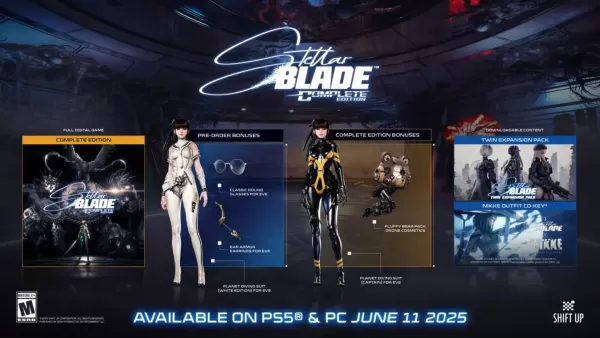 Stellar Blade launches on PC via Steam on June 11, accompanied by a host of PC-exclusive features, as revealed in a trailer that was briefly posted by Sony before being taken down.The trailer, published by Sony Interactive Entertainment on the PlayStAuthor : Logan Jun 06,2026
-
 ROYAL SLOTS CASINO: Wild Vegas Slot MachineDownload
 -
![[18+] Starlewd Valley:Re!](https://images.ydxad.com/uploads/37/173149215167347937c925c.jpg) [18+] Starlewd Valley:Re!Download
[18+] Starlewd Valley:Re!Download -
 Messy Academy (abdl diaper vn)Download
 -
 この素晴らしい世界に祝福を!ファンタスティックデイズDownload
 -
 BourreDownload
 -
 MagnoJuegos 5-EN-1Download
 -
 A Simple Life with My Unobtrusive SisterDownload
 -
 Collapse NPC RapeDownload
 -
 Hey Love Adam ModDownload
 -
 RogueMaster : Action RPGDownload










- Classic WoW vs. Turtle WoW: 6 Key Differences
- Ultimate Guide to Shinigami Progression in Hollow Era
- Roblox Simulator Codes: Unlock Exclusive Rewards!
- Mastering Two-Handed Weapons in Elden Ring: A Guide
- Wuthering Waves: Uncover the Secrets of Whisperwind Haven's Palette
- Top 25 Palworld Mods to Enhance Your Game