
"Zelda: Echoes of Wisdom - Exclusive Interview with First Female Director"
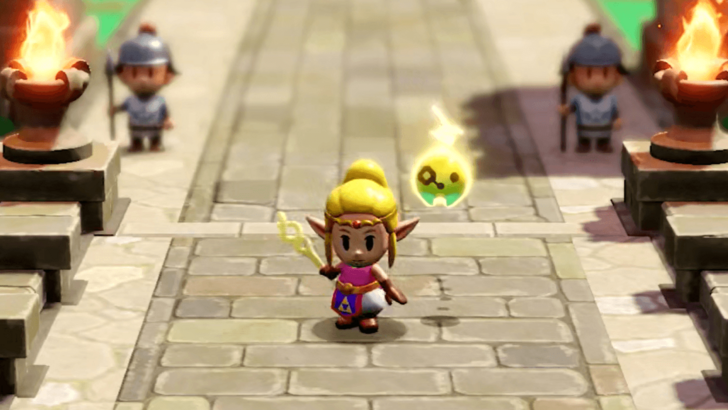
The Legend of Zelda: Echoes of Wisdom stands as a landmark release in the iconic series, not only for featuring Princess Zelda as the main protagonist for the first time but also for being the first game directed by a woman, Tomomi Sano. Dive deeper into the game's development and the vision behind it in this detailed overview.
Zelda: Echoes of Wisdom Details Revealed During Nintendo’s Ask the Developer Interviews
Meet Tomomi Sano, the Zelda Series’ First Female Director
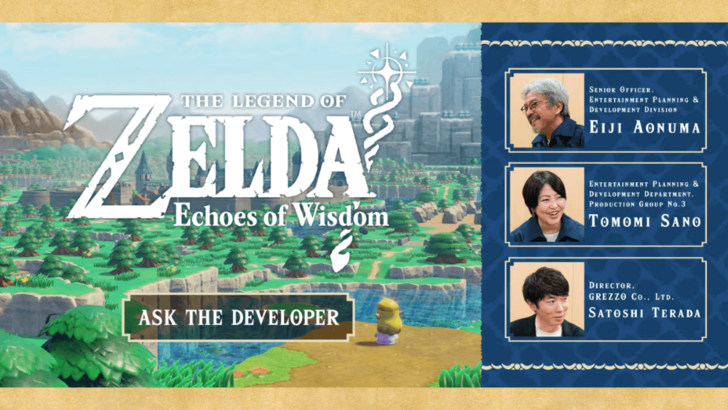
The Legend of Zelda series has long been celebrated for its intricate storytelling and challenging puzzles set within immersive dungeons. The upcoming The Legend of Zelda: Echoes of Wisdom not only introduces a new chapter where Princess Zelda steps into the spotlight as the playable protagonist but also marks a historic moment with Tomomi Sano as its first female director.
In an interview with Nintendo, Sano shared insights into her transition from a supporting role to leading the project. "Prior to this project, my main role was to support the director," she explained. Her previous contributions include significant work on remakes such as Ocarina of Time 3D, Majora’s Mask 3D, Link’s Awakening, and Twilight Princess HD, as well as titles in the Mario & Luigi series.
Sano's role in Echoes of Wisdom involved overseeing production, suggesting adjustments, and ensuring that the gameplay developed by Grezzo aligned with the essence of the Zelda series. Eiji Aonuma, the series producer, praised her involvement, stating, "I almost always ask her to be engaged in the Legend of Zelda remakes that Grezzo works on."
 Image from Nintendo's Ask the Developer Vol. 13
With a career spanning over two decades, Sano's journey began with her work as a Stage Texture editor for Tekken 3 in 1998. Her early contributions to Nintendo included the Japan-only Kururin Squash! and Mario Party 6 in 2004. Over the years, she has been involved in numerous Zelda and Mario & Luigi projects, as well as several Mario sports titles like Mario Tennis Open, Mario Tennis: Ultra Smash, and Mario Golf: World Tour.
Echoes of Wisdom Started as a Zelda Dungeon Maker, Revealed Aonuma
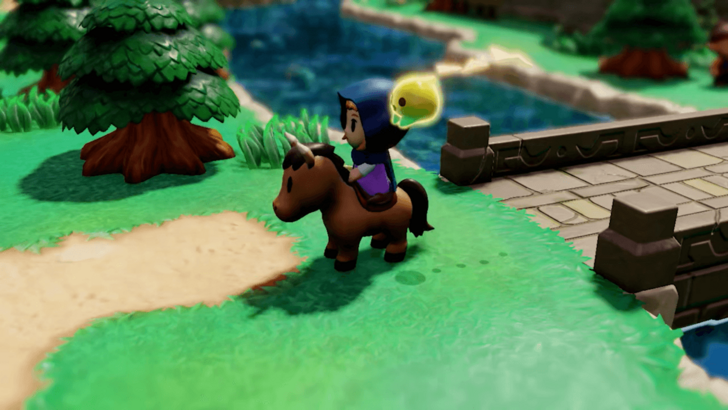
The origins of Echoes of Wisdom trace back to the success of the 2019 remake, The Legend of Zelda: Link’s Awakening. In the interview, Aonuma disclosed that Grezzo, the co-developers of Link’s Awakening, were initially tasked with exploring a new direction for the franchise. While the initial concept leaned towards another remake, Grezzo proposed something more innovative—a Zelda dungeon maker.
Aonuma's query, "If you were to make the next new game, what kind of game would you like it to be?" sparked numerous ideas. Early prototypes included a "copy-and-paste" mechanic and mixed perspectives reminiscent of Link’s Awakening. Satoshi Terada from Grezzo elaborated on one approach: "In one approach, Link could copy and paste various objects, such as doors and candlesticks, to create original dungeons. During this exploration phase, this was called an ‘edit dungeon’ because players could create their own Legend of Zelda gameplay."
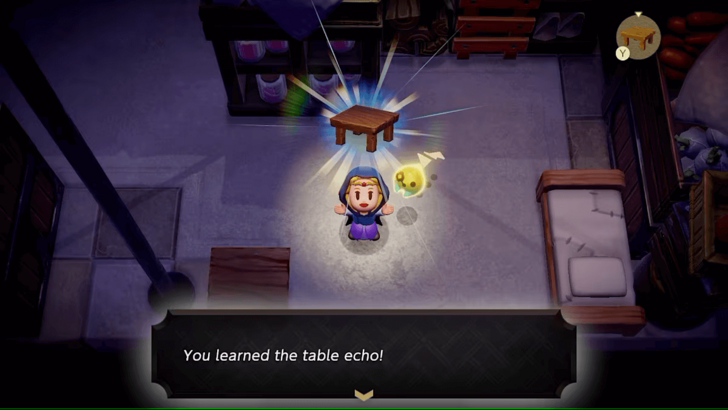
After over a year of development focused on the dungeon creation mechanic, Aonuma intervened, using the phrase "upending the tea table" to describe a pivotal change in direction. He felt that the dungeon-maker feature could be more impactful if players used copied-and-pasted items as tools to advance through the adventure, rather than solely creating dungeons.
Sano illustrated this concept with an example from Link’s Awakening: "If you copy that and paste it into the top view, you can drop it from above and crush things below, or conversely, you can ride on the Thwomp and use it to climb upward."
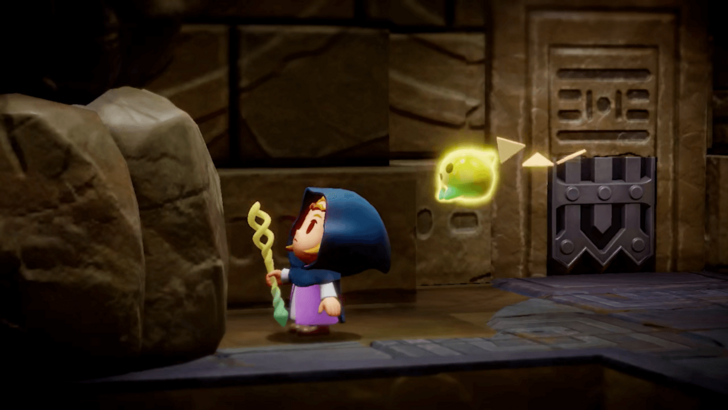
Initially, Aonuma was concerned about potential exploitation of the Echo mechanic, but the team eventually decided to remove all restrictions. This decision encouraged players to explore creative and unconventional gameplay. Aonuma emphasized, "We wanted to do some things that were really out there," which led to the inclusion of features like spike rollers, known for their unpredictable interactions.
Sano noted that the team created a document to guide this philosophy, outlining three key principles: "’Be able to paste things however, wherever, and whenever you like,’ ‘Make it possible to complete puzzles using things that aren’t there,’" and "being able to find uses for echoes that are so ingenious it almost feels like cheating should be part of what makes this game fun."
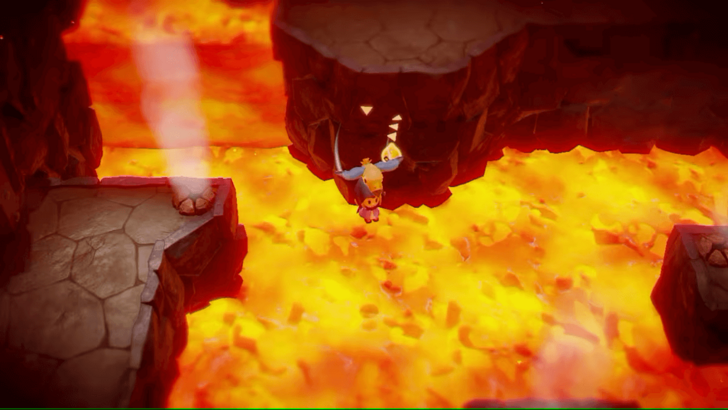
This approach aligns with the core values of creativity and freedom that define the Zelda series. Aonuma drew a parallel to the Myahm Agana Shrine in Breath of the Wild, where players could bypass obstacles creatively. "It’s like finding a secret trick in the game, just like the old days," he remarked. "If this kind of solution isn’t allowed, then it’s not fun."

The Legend of Zelda: Echoes of Wisdom is set to launch on September 26 for the Nintendo Switch, promising an adventure in an alternate timeline where Zelda takes on the role of rescuing Hyrule amidst numerous rifts. For a deeper dive into the game's mechanics and narrative, explore our comprehensive article below!
-
Sony kicked off State of Play June 2025 with the surprise announcement of Lumines Arise, from Tetris Effect developer Tetsuya Mizuguchi. It’s due out fall 2025 for PlayStation 5 and PS VR2, with a demo arriving this summer. The debut trailer is belowAuthor : Stella Mar 08,2026
-
Palworld developer Pocketpair recently confirmed that key gameplay alterations in recent updates were directly influenced by Nintendo and The Pokémon Company's ongoing patent lawsuit. Launched in early 2024 at $30 on Steam and included in Game PassAuthor : Lily Mar 08,2026
-
 SwingShotDownload
 -
 The Seven Realms 3Download
 -
 Curse of the Night Stalker - Chapter 3 releaseDownload
 -
 My Home Design: My House GamesDownload
 -
 100+ RiddlesDownload
 -
 Elite PokerDownload
 -
 Sinful Summer: A Tale of ForbiddenDownload
 -
 Monster Girl 1000Download
 -
 1-19 Number GameDownload
 -
 Monster Arena by Erma SharpeDownload







- HoYo Fest 2025: Fresh Updates on Comeback
- Mastering Two-Handed Weapons in Elden Ring: A Guide
- Roblox Simulator Codes: Unlock Exclusive Rewards!
- Ultimate Guide to Shinigami Progression in Hollow Era
- Wuthering Waves: Uncover the Secrets of Whisperwind Haven's Palette
- Top 25 Palworld Mods to Enhance Your Game