
Civilization VII's UI Draws Scrutiny
 Civilization VII's Deluxe Edition debuted recently, and online discussions about its user interface (UI) are already intense. But is the criticism justified? Let's delve into the UI's components and assess whether it's as flawed as many claim.
← Return to Sid Meier's Civilization VII main article
Is Civ 7's UI as Bad as They Say?
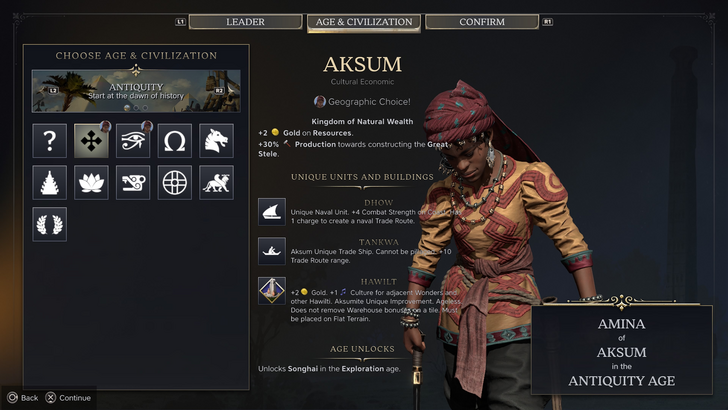 Early adopters of the Deluxe and Founder's Editions have already voiced concerns about Civilization VII's UI, citing it as a significant drawback alongside other missing features. While it's easy to join the chorus of disapproval, a more objective evaluation is necessary. We'll analyze the UI element by element, comparing it to the characteristics of a well-designed 4X game interface.
What Constitutes a Good 4X UI?
 Defining an objectively "good" 4X UI is complex. The ideal UI varies depending on the game's style, goals, and context. However, common principles from visual design research consistently appear in successful 4X UIs. Let's use these principles to evaluate Civ VII's UI.
We'll assess Civ 7 against key elements of effective 4X UI design:
Clear Information Hierarchy
 A clear information hierarchy prioritizes accessibility and relevance. Frequently used resources and mechanics should be prominent, while less critical elements should be easily accessible. The UI shouldn't display everything at once, but it should logically organize information.
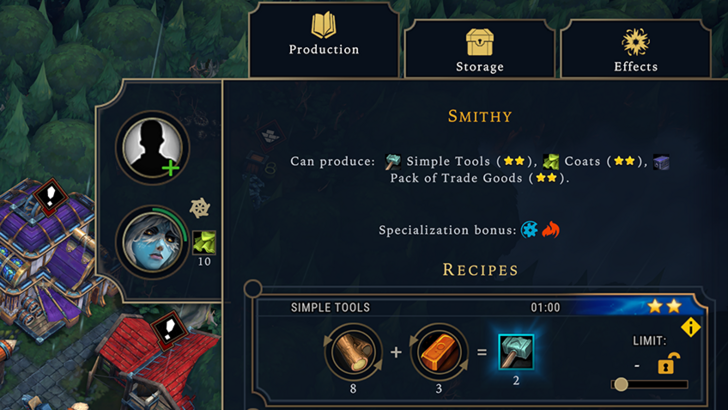
Against the Storm provides a strong example. Building info menus, accessed via right-click, use tabs to categorize information by frequency of use. Common actions are prioritized, while less frequent options are placed in separate tabs.
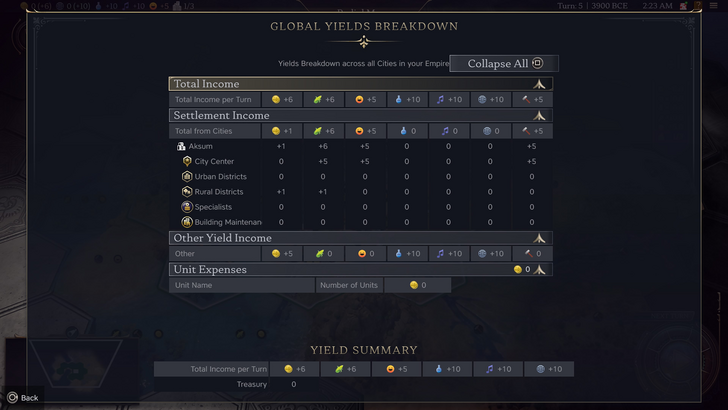
Civ VII's resource summary displays resource allocation, separating income, yields, and expenses. While the table format is helpful, it lacks granular detail. The UI doesn't specify which district or hex generates specific resources, nor does it comprehensively detail expenses beyond unit upkeep. It functions adequately, but greater specificity would improve it.
Effective and Efficient Visual Indicators
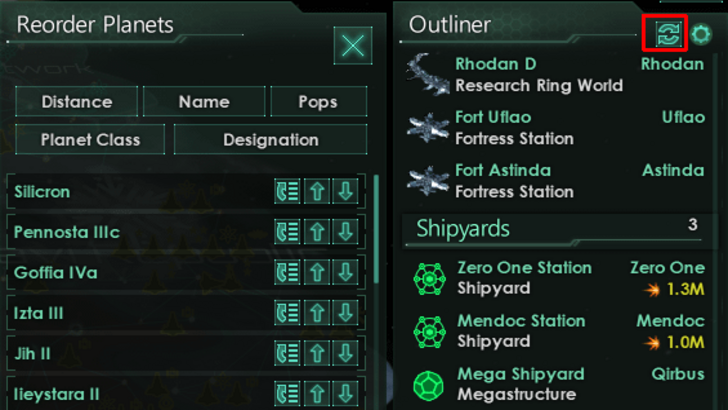 Visual indicators—icons, colors, overlays—convey information quickly without relying on text. A good UI uses these to communicate crucial data efficiently.
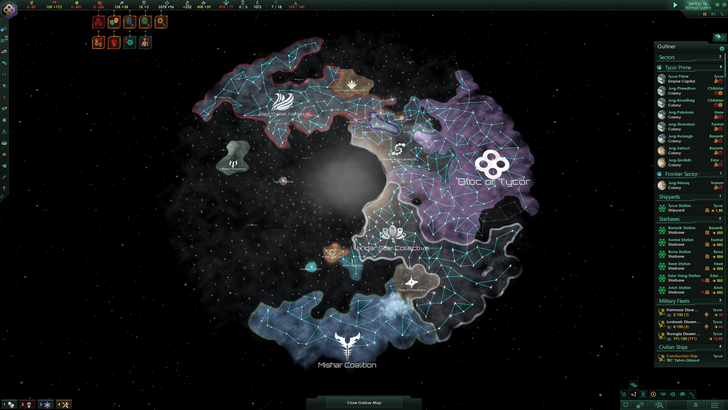
Stellaris, despite its cluttered UI, uses visual indicators effectively in its Outliner. Icons instantly show the status of ships and colony needs.
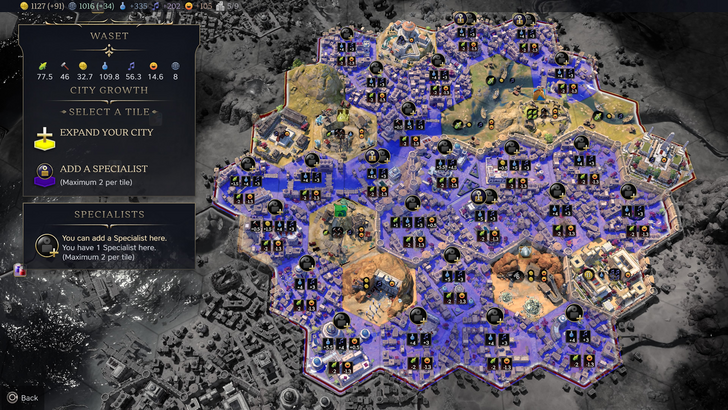
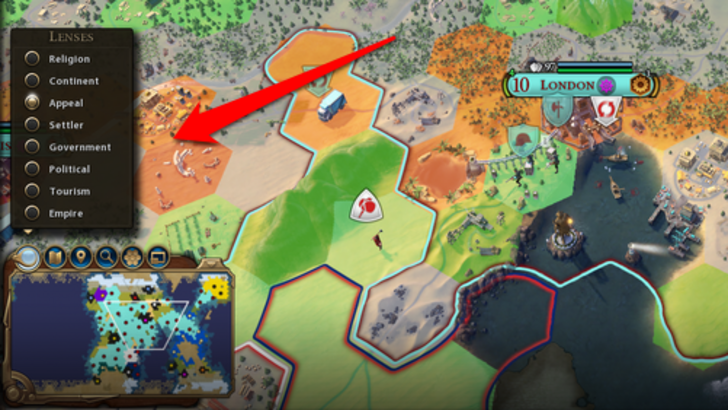
Civ VII uses iconography and numerical data. Tile yield overlays, settlement overlays, and settlement expansion screens are examples of effective visual communication. However, the absence of certain lenses from Civ VI (e.g., appeal, tourism, loyalty) and customizable map pins has been criticized. While not terrible, improvement is possible.
Searching, Filtering, and Sorting Options
 As complexity increases, search, filter, and sort options become vital. These allow players to control displayed information.
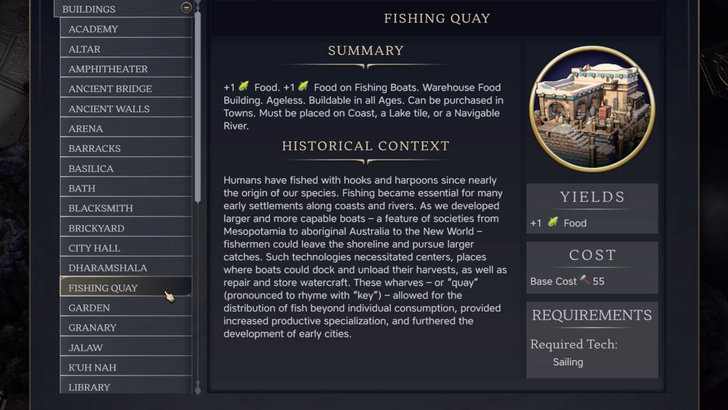
Civ VI's robust search function is a prime example, allowing players to locate resources, units, and features easily. Its Civilopedia links directly to in-game elements.
Civ VII lacks this crucial search function, a significant usability issue. This omission is a major drawback, hopefully addressed in future updates.
Design and Visual Consistency
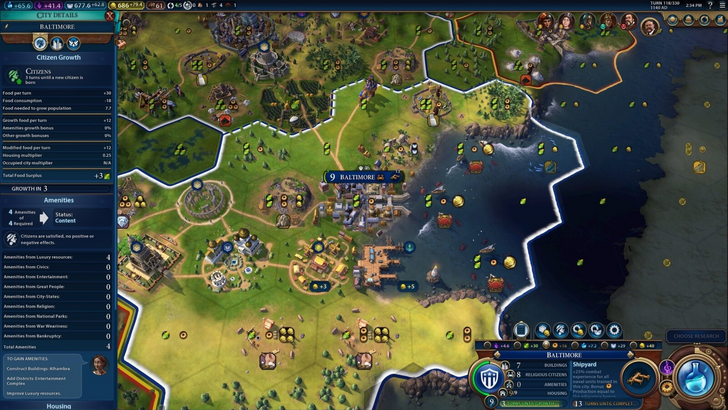 The UI's aesthetic and cohesiveness are crucial. A poorly designed UI can detract from the overall experience.
Civ VI's dynamic, cartographical style is a strong point, seamlessly integrating with the game's aesthetic.
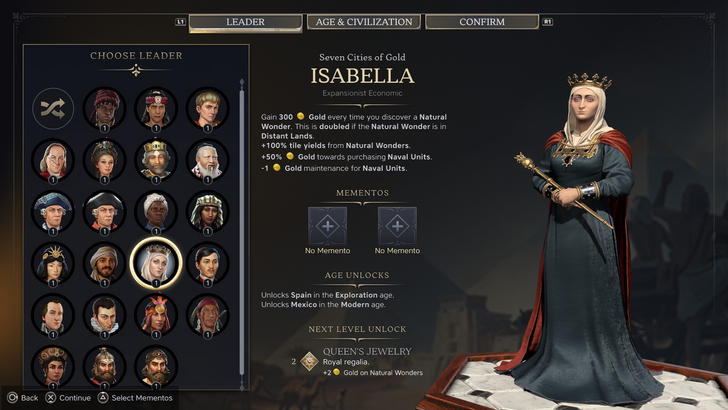
Civ VII adopts a minimalist, sleek design. While not cheap-looking, its subtler thematic direction has led to mixed reactions. Visual design is subjective, but the lack of immediate clarity is a valid criticism.
The Verdict: Not the Worst, But Room for Improvement
 Civ VII's UI, while not ideal, isn't as disastrous as some claim. The missing search function is a significant flaw, but not game-breaking. Compared to other issues, it's relatively minor. While it pales in comparison to some visually striking 4X UIs, it possesses strengths. With updates and player feedback, it can improve significantly. The overall game's quality compensates for the UI's imperfections.
← Return to Sid Meier's Civilization VII main article
Sid Meier's Civilization VII Similar Games

-
Lego Batman: Legacy of the Dark Knight Lego Batman: Legacy of the Dark Knight has been unveiled during Gamescom’s Opening Night Live, showcasing an expansive open-world Gotham City you can explore in the iconic Batmobile. The highly anticipated projeAuthor : Ava Mar 25,2026
-
 East Side Games Group is merging two wildly different universes in an exhilarating crossover. Trailer Park Boys: Greasy Money is joining forces with All Elite Wrestling: Rise to The Top. This special event begins on March 27th at 2:00 PM PT, deliveriAuthor : Sarah Mar 17,2026




















- Classic WoW vs. Turtle WoW: 6 Key Differences
- Ultimate Guide to Shinigami Progression in Hollow Era
- Mastering Two-Handed Weapons in Elden Ring: A Guide
- Roblox Simulator Codes: Unlock Exclusive Rewards!
- Wuthering Waves: Uncover the Secrets of Whisperwind Haven's Palette
- Top 25 Palworld Mods to Enhance Your Game